Ask Blipko anything
You could always log a spend by texting. Now you can ask about one.
The numbers aren't guessed
This is the part that matters.
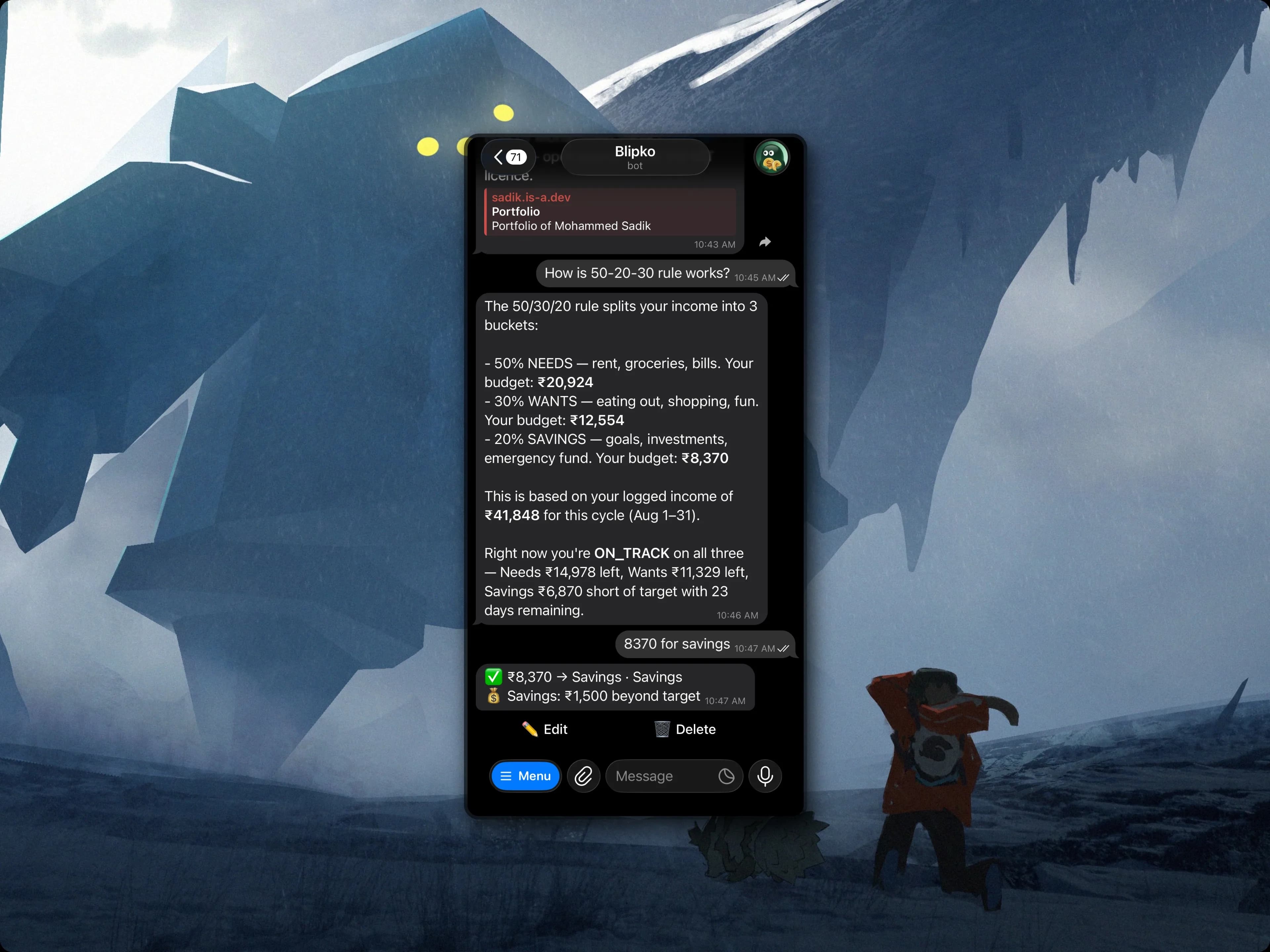
Ask how 50/30/20 works and you don't get the Wikipedia version. You get your split, worked out from the income you've actually logged this cycle, with what's left in each bucket and how many days it has to last.
Every figure comes out of your own records, and every comparison is settled before the AI is involved — affordability is a yes/tight/no decision made in code, cycle comparisons arrive with the difference already calculated. The AI chooses what to look up and how to say it. It doesn't do the arithmetic.
Which also means it will tell you no.
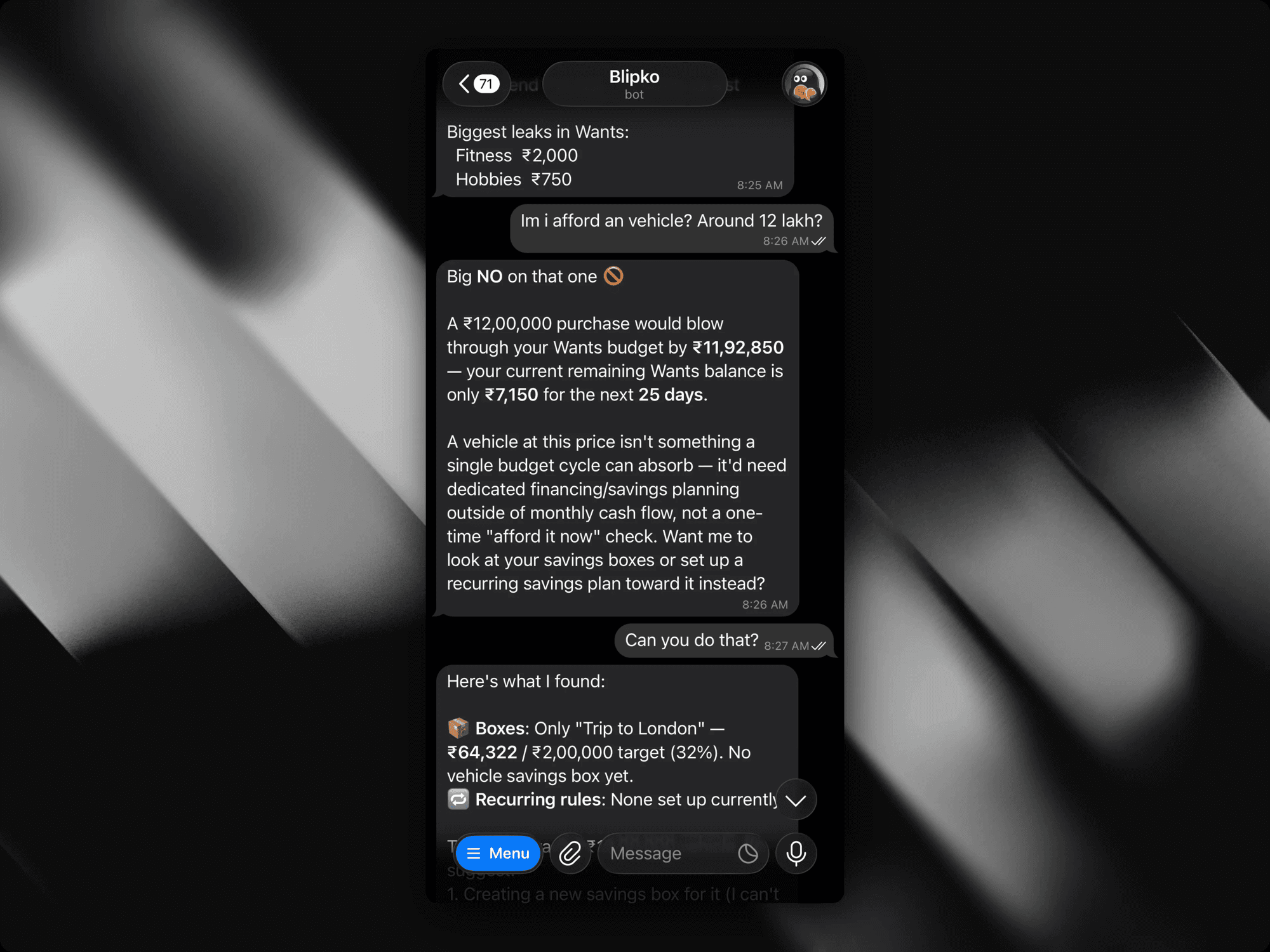
Ask whether you can afford something well out of reach and you get a straight no with the size of the gap — then it goes and looks at what you'd actually need: your boxes, your recurring rules, what's already set aside. A budget that only ever says yes isn't worth asking.
It will also tell you when it simply doesn't know. Ask about a category with nothing logged against it and you get "nothing recorded" — never a confident ₹0.
It can explain itself, too
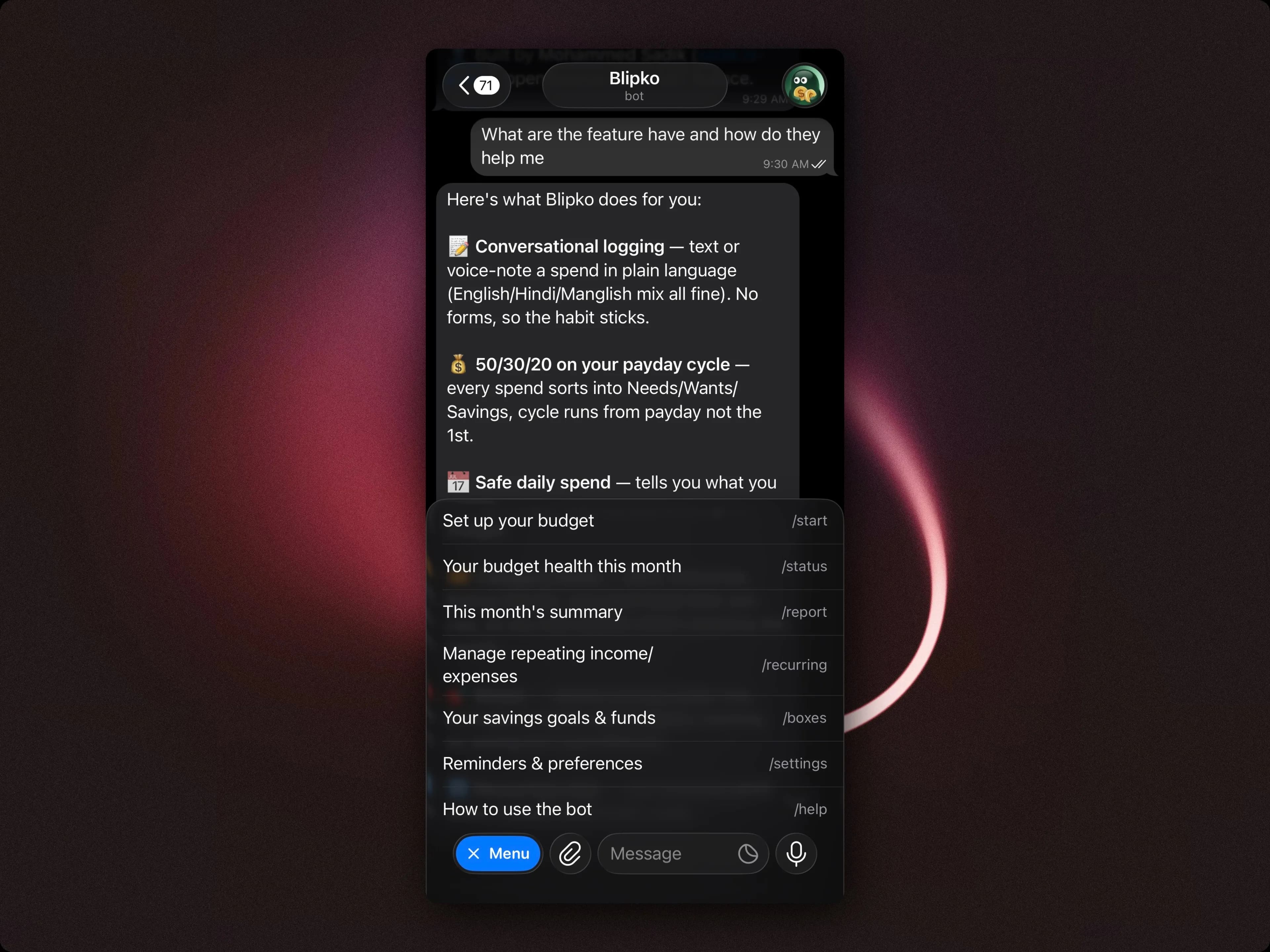
"What can you do?" used to be the one question the bot couldn't answer. Now it lists what it has — and why each one is there, because that's the thing people actually want to know before trusting an app with their money. Ask how it works, where your dashboard is, or who built it, and it answers from a maintained list rather than improvising, so it can't invent a feature that doesn't exist.
Ask out loud
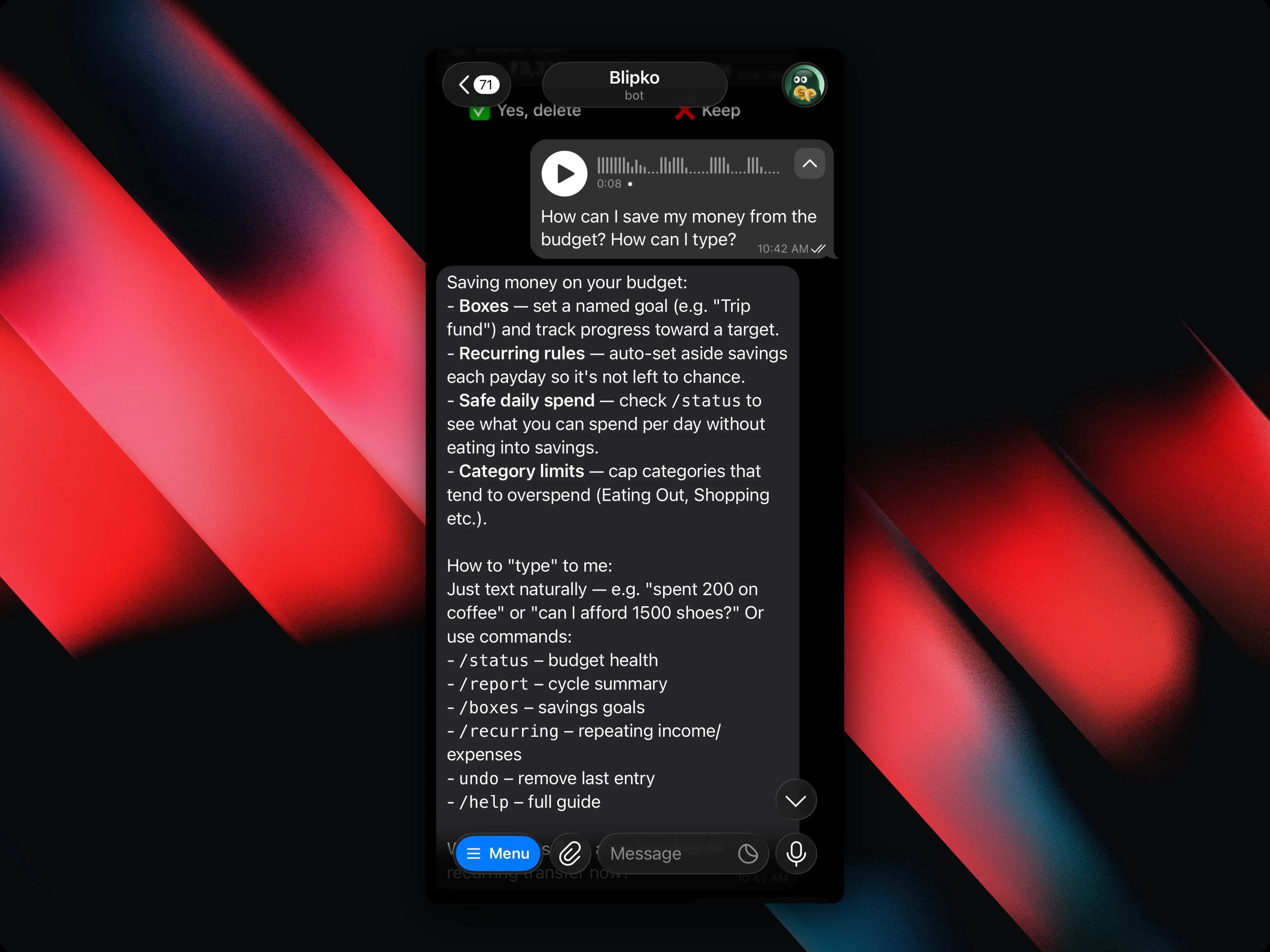
Voice notes used to be for logging a spend. Now you can ask a question the same way and get the same grounded answer back.
Changes are proposed, not made
It can edit a spend, delete one, set up a recurring rule, or move money into a box — but it only ever proposes. You get a one-line summary built from the actual record it would touch, and Confirm and Cancel buttons. Nothing is written until you tap.
Also
- Dates work in your timezone. "Yesterday" means your yesterday, including late at night, when it used to mean the server's.
- Questions about a specific category no longer come back empty when you've customised that category.